Section 07-03B: Transmission, Manual, Model S5-47 ZF | 1996 F-Series Vehicles Over 8500 lbs. GVW Workshop Manual |
Synchronizer Ring/Synchronizer Body Wear Check
Inspect the internal surface for contact pattern. The contact pattern should be the same on the entire internal circumference of the ring.
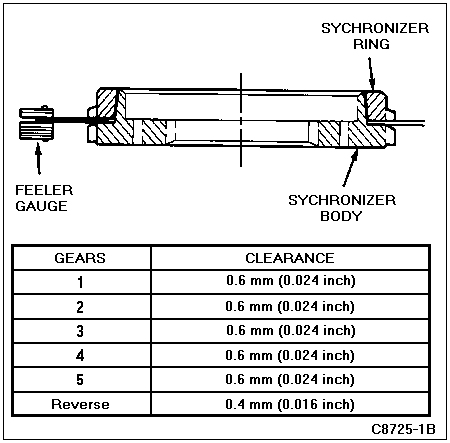
Position the synchronizer ring on the synchronizer body as shown in the illustration. Insert a feeler gauge and measure clearance at two opposite points. If clearance is less than 0.6mm (0.024 inch) for the 3rd-4th, 1st-2nd and 5th synchronizers (7124) and 0.4mm (0.016 inch) for the reverse synchronizers, replace the synchronizer, affected mainshaft gear, or both if required to bring to within specification.
Synchronizer Compression Spring Tension Check
Check the length of all compression springs of synchronizers.
| Unloaded Length | O.D. | Wire Diameter |
|---|---|---|
| 14.8mm (Min.) (0.583 In.) | 5.960mm (0.235 In.) | 0.95mm (0.037 In.) |
Mainshaft and Input Shaft Gears
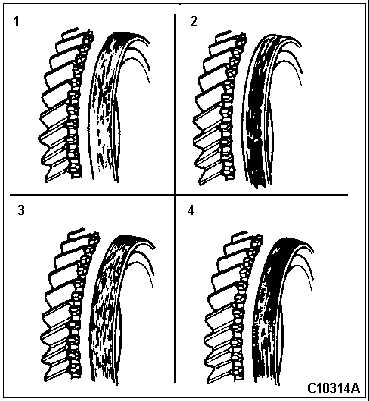
Inspect the friction taper cone on the gears and check for the following wear patterns.
Replace gears showing excessively burnt spots (reddish-blue) on the friction taper cone edges. In this case, the selector teeth will be damaged as well.
Reuse the gears if sufficient synchronizer reserve allowance is available and the teeth (dog teeth) are in good condition. Acceptable wear patterns are depicted in the following illustration.
Shift Fork/Sliding Sleeve
Check the contact surfaces of the shift fork and sliding hub sleeve for evidence of wear or damage.
Synchronizer Body
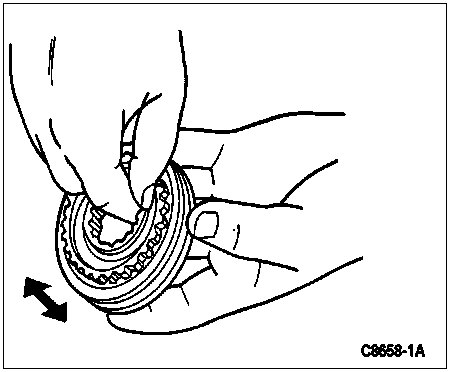
Check operation of sliding sleeve installed onto synchronizer body.
Position synchronizer body and sleeve horizontally. Lift the synchronizer body approximately three-quarters of the way off the sleeve. Release the synchronizer body, and observe downward motion. Synchronizer body should slide downward into sleeve on its own. It should not be necessary to push synchronizer body into sleeve. Service as necessary.