1994 PCED OBDI-A | SECTION 18A: Diesel Diagnosis — 7.3L DI Engine |
The purpose of this test is to see if the fuel system is getting sufficient clean fuel to operate correctly.
Route a hose from the fuel drain line to a clear container and open the drain. Idle the engine and observe the fuel flowing into the container. Stop idling the engine when the container is half full.
Inspect water in fuel lamp while cranking. If the lamp is illuminated the fuel is probably contaminated with water.
Flow out of the drain should be a steady stream. Insufficient flow could indicate fuel supply or fuel system problems.
Inspect fuel in the container, it should be straw colored but not cloudy. It also should be free of water and contaminants. Dyed red or blue fuel indicates off-highway fuel.
If engine oil is present in the fuel it may indicate an injector O-ring leak and subsequent loss of rail pressure. If that is suspected, check rail pressure during engine cranking (Test 11a). Some sediment and water may be present in the fuel sample if the fuel filter has not been serviced for a prolonged period of time and/or if the sediment and water have not been drained recently. If that is the case a second sample may be required to determine fuel quality.
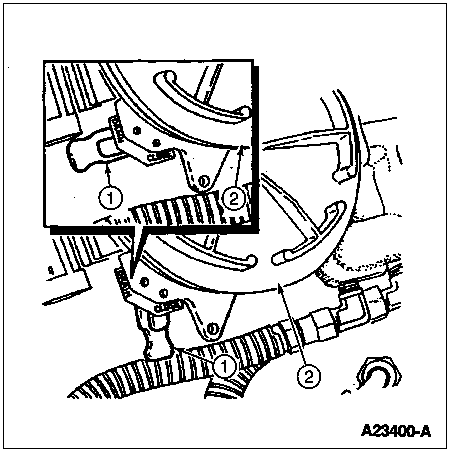
(Low or No Fuel Flow)
No fuel in tank. If equipped with a fuel line valve, it could be shut off. If equipped with dual tanks, the switch valve could be faulty, the fuel feed line could be broken or crimped, the fuel could be jelled (most likely in cold weather with No. 2 fuel) or the screen in tank could be clogged.
Cloudy fuel indicates that the fuel may not be a suitable grade for cold temperatures. Excessive water or contaminants may indicate that the tank and fuel system may need to be flushed and cleaned.
Clear container
To determine if there is enough oil or oil of sufficient quality to operate the injectors.
Check oil level with oil level gauge. If there is no oil or very little oil in the crankcase, the injectors will not operate.
If the oil level is overfull, it is possible the engine was incorrectly serviced or fuel is diluting the oil and filling the crankcase. If a substantial amount of fuel is in the oil, it will have a fuel odor.
Inspect oil for color. A milky white oil indicates possible coolant contamination which will have an ethylene glycol odor.
Check service records for correct oil type and viscosity for the vehicle operating temperature. Single weight or 15 W40 oil is not recommended for cold ambient temperatures. Oil that has had extended drain intervals will have increased viscosity (become thicker) and will make engine cranking more difficult and starting less reliable at temperatures below freezing. Refer to the lube oil chart in the service manual or operator's manual for the correct oil selection for temperature conditions.
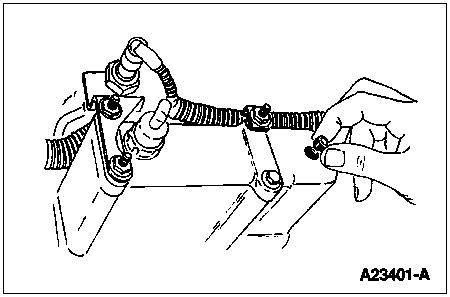
The level in the oil reservoir should also be checked. Remove the inspection plug in top of reservoir and check to see if the oil reservoir is full (a reservoir that drains back after the engine has not been operated for a period of time can cause a hard start or a start and die condition). Filling the reservoir will allow the system to prime faster, facilitating starting.
Oil level low — oil leak, oil consumption, incorrect servicing
Oil level high — incorrect servicing, fuel dilution from lift pump, fuel dilution from injector O-rings
Oil contamination with coolant — oil cooler, head gasket, porosity
Low reservoir level — engine built dry (not pressured lubed), prolonged period of not running, leaking check valve in high-pressure pump
None
This is visual inspection to determine if intake restriction is contributing to a low power condition. If the engine does have high inlet restriction, a considerable amount of black or blue smoke may be produced.
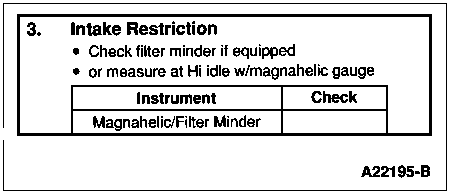
Inspect the air cleaner inlet and ducting to assure that it is not blocked or collapsed. Inspect air cleaner housing and filter for proper installation.
If necessary, install a magnehelic gauge on the port on the air cleaner and measure restriction at high idle.
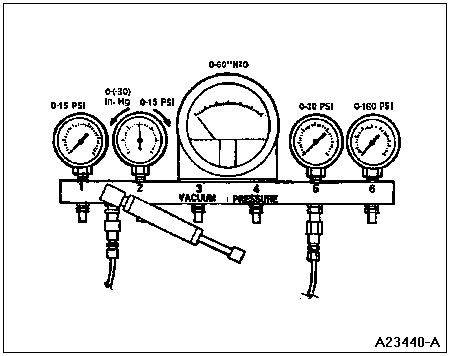
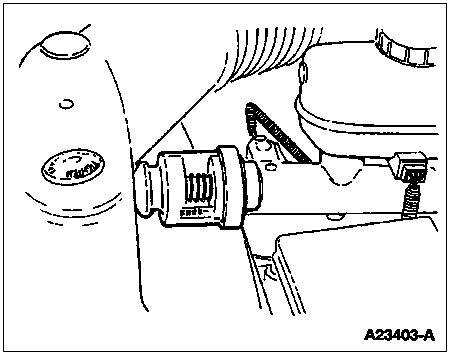
Snow, plastic bags or other foreign material may block the air cleaner inlet. Misrouted air cleaner ducting may collapse when the hood is shut. On engines recently repaired, rags or cap plugs may have been inadvertently left in an intake pipe.
Magnehelic gauge
To determine if the PCM has detected any fault conditions that would cause a performance problem.
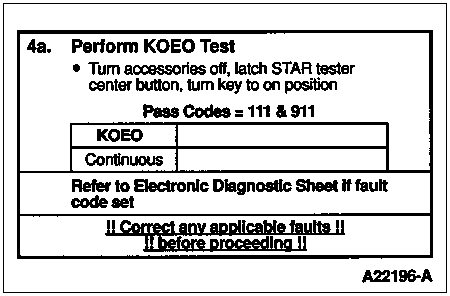
With all accessories off and the ignition key off, connect the Super STAR II tester to the correct connector under the hood. Latch the center button on the Super STAR II tester ON and turn the ignition key to the RUN position.
Record all codes transmitted. Code 10 is the separator code between KOEO and continuous faults.)
If any fault codes other than the PASS codes of 111 and 911 are transmitted, refer to Electronic Diagnostic procedures.
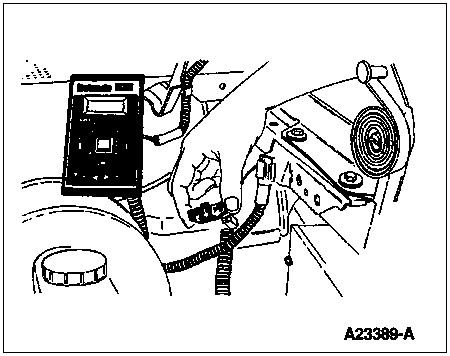
Rotunda Super STAR II tester 007-0041B
To determine if the injectors are electronically capable of firing and provide the technician with a fault code and audible feedback for injector operation.
After a KOEO test with the engine off and on operator demand, this test will rapidly electronically fire all of the injectors then repeatedly fire an individual injector in numerical sequence. Reading any subsequent fault codes and/or listening for the injector buzz will allow the technician to determine if the injector solenoids are functioning.

It is recommended that all present and historical faults be corrected before performing this test.
With all accessories off and the ignition key off, connect the Super STAR II tester to the diagnostic connector under the hood. Latch the center button on the Super STAR II tester ON and turn the ignition key to the RUN position.
Depress and release the brake pedal during slow code transmission to abort standard KOEO tests. Depress and release the accelerator to start the injector buzz test.
All injectors will rapidly fire for approximately 2 seconds. Individual injectors will buzz in approximately 1 second intervals in numerical order (1 through 8).
At the end of the test either a pass code will be transmitted or fault code(s) indicating which injector(s) could not be enabled.
Open injector wire, bad injector connector, shorted wire or connector, open solenoid or defective IDM
Rotunda Super STAR II tester 007-0041B
To determine if the exhaust system is sufficiently restricted to cause a performance problem.
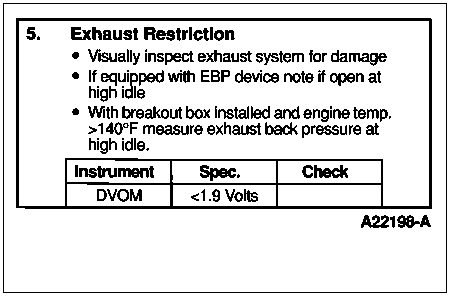
A thorough visual inspection will find the problem quickly in most instances. If a measurement is necessary, install breakout box at PCM, measure voltage between Pin 30 and Pin 91 to allow the voltage signal to be monitored that will correlate to a specific pressure. Measure this pressure at high idle (maximum engine speed with engine out of gear, wheels blocked and brake engaged).
Collapsed tail pipe, clogged tail pipe, closed exhaust back pressure device, clogged catalytic converter or damaged muffler
Rotunda 104 Pin breakout box 014-00950 and Rotunda DVOM 105-00050
To determine if there is sufficient fuel pressure for correct engine operation.
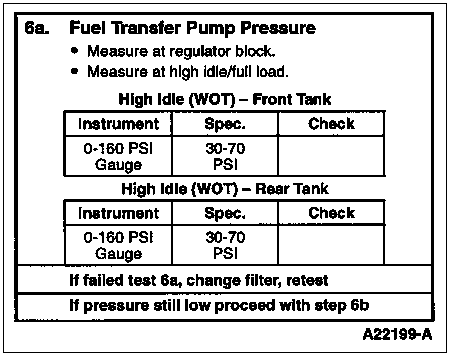
Note if operator has indicated if the high fuel restriction lamp has been illuminated. A restricted fuel filter may be causing low fuel pressure.
Connect line for 160 psi gauge to the Schrader valve mounted in the fuel regulator block on the side of the fuel filter housing. Run the engine at low idle and check for leaks in the line to the gauge. Operate the engine at high idle (maximum engine speed out of gear with the brakes set and the wheels blocked). Measure maximum fuel pressure and compare to specification.
Repeat for front and rear tanks.
Change the fuel filter if the pressure is low and retest. If fuel pressure is still low, go to Test 6b below and check restriction from the fuel tank.
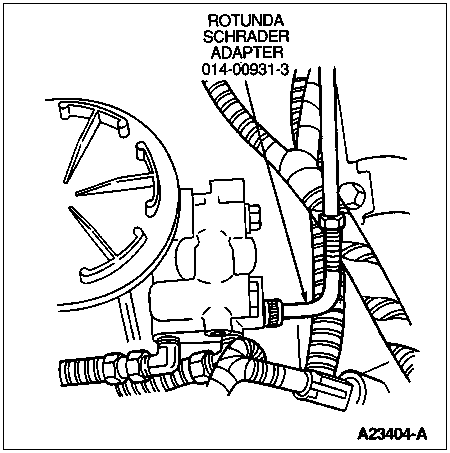
A fuel filter could cause high restriction and low fuel pressure because of dirt or fuel jelling in cold ambient temperatures. Change filter and retest. It may take a couple of crank cycles to purge the air out of the fuel system.
Debris in the fuel regulator valve will cause low fuel pressure. Disassemble, inspect and clean.
A kinked or severely bent fuel supply line or blockage at the pickup tube could cause restriction and therefore low fuel pressure.
A loose fuel line on the suction side of the fuel system could cause air to be ingested into the system and cause low fuel pressure.
The fuel pump could have internal damage, e.g., ruptured diaphragm, seized plunger or leaking check valves.
0 to 160 psi fuel pressure gauge, appropriate line with 1/4-inch NPT fitting (or Schrader valve connector if equipped)
To determine if there is excessive restriction of fuel flow from the inlet fuel line to the fuel tank(s).
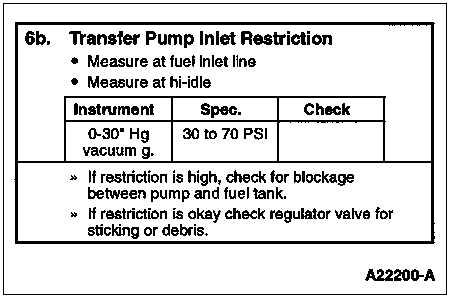
Remove the short rubber hose at the fuel inlet line (left side of engine close to the frame rail). The larger of the two fuel lines is the fuel inlet. The smaller line is fuel return. Install a "T" plumed to a fuel restriction gauge (0 to 30 inch-Hg vacuum). Measure restriction at high idle (maximum engine speed out of gear with the brakes set and the wheels blocked). If restriction measures above specification, there is a blockage between the engine and the tank.
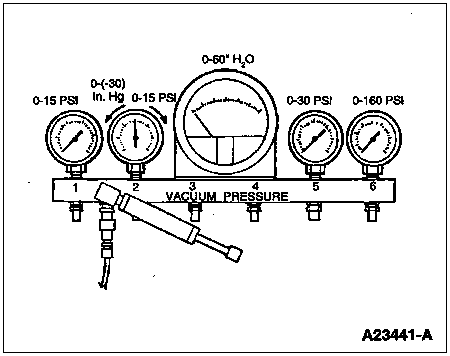
A kinked or severely bent fuel supply line or blockage at the pickup tube could cause restriction and cause high restriction.
The switch valve for fuel tanks could be damaged.
In very cold ambient temperatures with No. 2 fuel, the fuel could be jelled in the lines and cause restriction.
0 to 30 inch-Hg vacuum gauge, "T" to access full line (fabricated locally from common fittings)
To determine if the PCM has detected any fault conditions that would cause a performance problem while the engine is running. This test also verifies the operation of various switches as described in the procedure below and will perform step tests* on the injection control pressure system and the exhaust back pressure system.
Step tests are PCM-controlled tests where the PCM commands a specific exhaust back pressure or injection control pressure and then measures the result. If a predetermined threshold is not reached, a fault code will be generated.
The cylinder contribution test can also be accessed after the completion of the switch tests and the step tests.

Note: The engine will run rough during the KOER Step Tests.
Rotunda Super STAR II Tester 007-0041B
To test individual power cylinders and injectors to determine if all are contributing equally to engine performance.
This is a test performed by the PCM after a standard KOER test is performed.
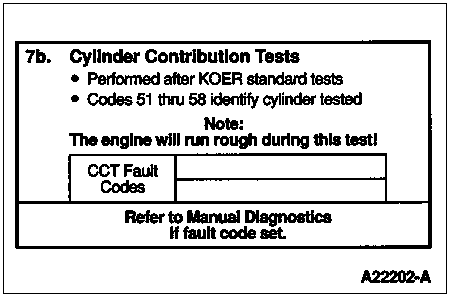
Note: The engine will operate at an elevated low idle speed and will run rough during this test.
Failing this test could indicate mechanical engine problems such as broken compression rings, leaking or bent valves, bent push rods, bent connecting rods.
If the base engine condition meets specifications, the injector may not be functioning correctly and will need replacement. The solenoid and wiring should have been checked in earlier tests. If the Buzz test (Test 2 under Scan Tool Diagnostic Test Procedures) was skipped, go back to perform that test before proceeding.)
Rotunda Super STAR II tester 007-0041B
To determine if air is being drawn into the fuel system.
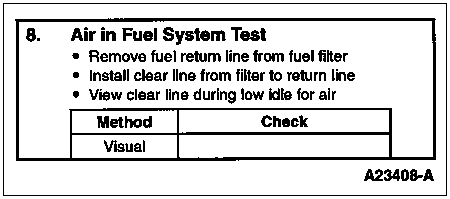
Note: If the filter has just been changed air may be present in the clear line until vented.
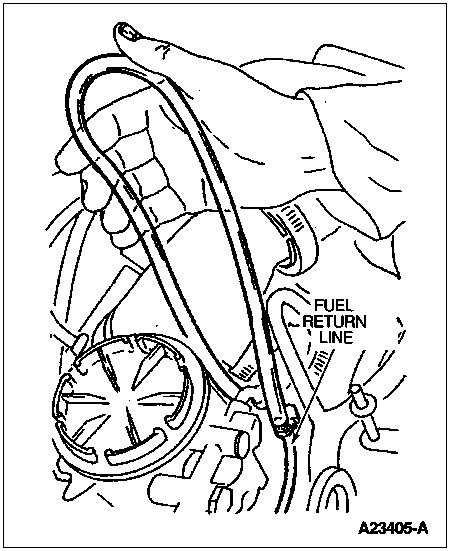
Loose and leaking fuel line fittings at:
Clear line and hose clamps
To determine if the engine lube oil is aerated and causing poor idle quality.
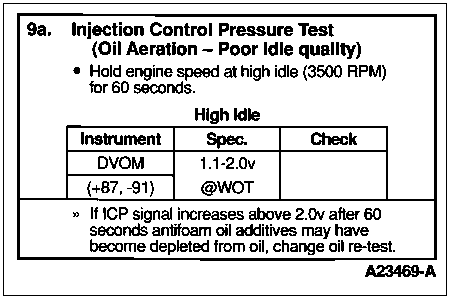
Install the breakout box on the PCM. Measure the ICP signal through Pins 87 and 91. Make sure the parking brake is on and the transmission is out of gear. Operate the engine at high idle (WOT) for 60 seconds while monitoring the ICP signal. A normal signal is between 1.1 and 2.0 volts. If the signal does not stabilize below 2.0 volts and continues to rise as high idle speed is maintained, the engine lube oil may be aerated. Change oil and filter and retest.
Rotunda DVOM 105-00050, Rotunda 104 Pin breakout box 014-00950
To determine if idle stability and/or low power is caused by a stuck or dirty IPR or bad ICP signal.
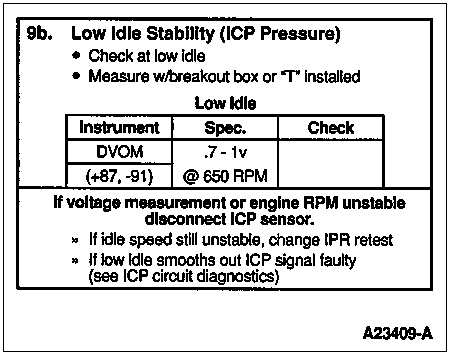
Install the breakout box on the PCM. Measure the ICP signal through Pins 81 and 91. Make sure the parking brake is on and the transmission is out of gear. Operate the engine at low idle (650 rpm). A normal signal with the engine at operating temperature is between .7 and 1.0 volts. If the signal and engine does not stabilize, disconnect the ICP sensor. If the low idle speed stabilizes with the ICP sensor disconnected the problem is most likely in the ICP sensor circuit. Refer to Pinpoint Test X. If the rpm does not stabilize, change the IPR valve and retest.
Rotunda DVOM 105-00050, jumper harness/probe or a Rotunda 104 Pin breakout box 014-00950
This test will measure crankcase pressure. Crankcase pressure is a measure of how well the power cylinder is sealing.
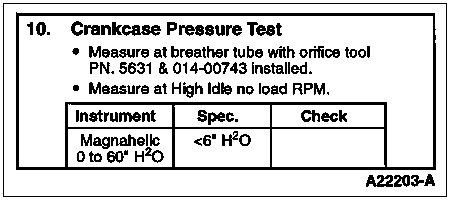
Make sure the engine is up to operating temperature. A cold engine will give higher readings. Remove the ducting to the turbocharger inlet pipe and remove the inlet pipe and elbow that connects to the breather box. Block the outlet at the breather box. Install a protective screen over the turbocharger inlet.
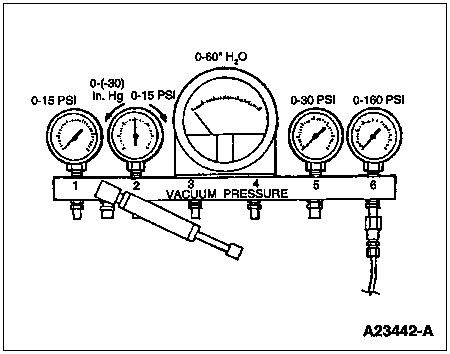
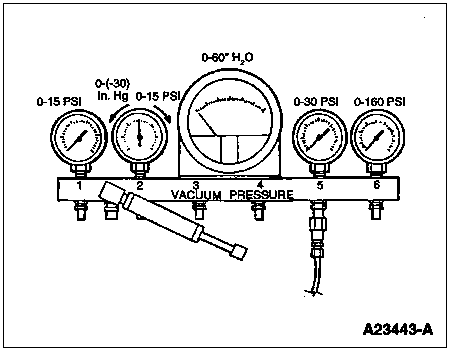
Screw the crankcase breather tool and adapter in the oil fill cap hole. Plumb to the magnehelic gauge in the gauge block. Make sure the magnehelic gauge has been zeroed.
Start the engine and operate at high idle. Hold for 30 seconds minimum and take a stabilized reading.
Broken or worn compression rings, polished bores, leaking or bent valves
Inspect air induction system, if the air induction system allows dirt to enter the power cylinder it will quickly "dust" the engine causing high crankcase pressure.
Magnehelic gauge, orifice restriction tool, oil fill adapter, protective screen
To determine if the engine can develop sufficient boost to obtain specific power.
If the engine can obtain specified boost there is no engine power problem. There may be chassis or applications concerns but the engine is performing as specified.
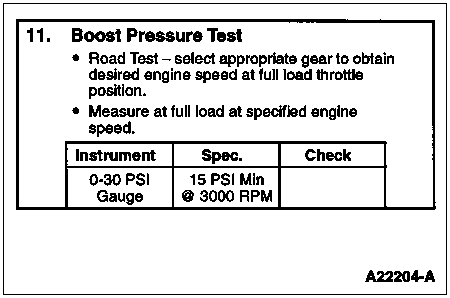
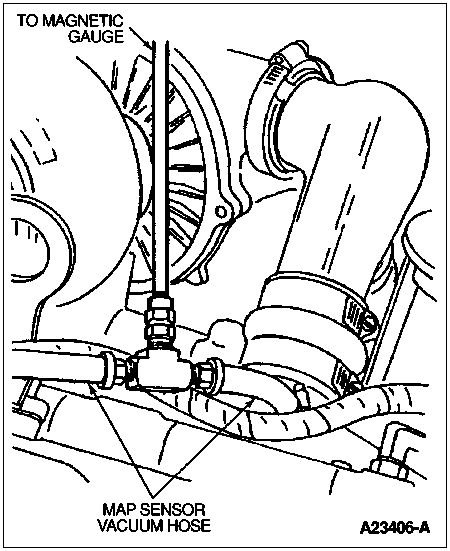
Install a "T" (manufactured locally out of common fittings) into the MAP (manifold absolute pressure) sensor line that comes from the intake manifold. Make sure the MAP sensor is hooked up for this test.
Connect a "T" to a 0 to 30 psi gauge that is temporarily installed in the cab. Route the hose so that it is not crimped and does not come in contact with any hot surface.
After the engine is up to operating temperature find an open section of road and select 3rd gear. With the accelerator at WOT, note the boost reading at 3000 rpm. This test is best accomplished either climbing a hill or with the truck fully loaded.
Restricted intake or exhaust, low fuel pressure, low injection control pressure, control system faults, defective injectors, defective turbocharger, base engine failure
"T", 0 to 30 psi gauge