1994 PCED OBDI-A | SECTION 18A: Diesel Diagnosis — 7.3L DI Engine |
Y1 DIAGNOSTIC TROUBLE CODE (DTC) 116: CHECK OPERATION, INSTALLATION OF TEMPERATURE SENSOR
DTC 116 (EOT) indicates that the EOT (engine oil temperature) is not warm enough to perform a KOER test or CCT test. The engine oil temperature must be greater than 80°C or 176°F (1.37 volts).
Possible causes:
- Engine not fully warmed up.
- Low oil level (EOT).
- Worn or damaged sensor.
- Drive vehicle until thermostat opens.
- Fully warm engine.
- Check that upper radiator hose is hot and pressurized.
- Rerun Scan Tool Diagnostic Test.
Is DTC 116 present?
| Yes | No |
|---|
| GO to Y2. | SERVICE other DTCs as necessary. |
Y2 CHECK VREF CIRCUIT VOLTAGE AT MAP SENSOR
- Refer to schematic in Pinpoint Test D.
- Key off.
- Disconnect MAP sensor.
- Key on, engine off.
- Measure voltage between VREF circuit and SIG RTN circuit at the MAP sensor vehicle harness connector.
Is voltage between 4.5 volts and 5.5 volts?
| Yes | No |
|---|
| RECONNECT MAP sensor. GO to Y3. | GO to Pinpoint Test Step B1. |
Y3 CHECK RESISTANCE OF TEMPERATURE SENSOR WITH ENGINE OFF
- Key off.
- Disconnect suspect temperature sensor.
- Measure resistance between sensor signal circuit and SIG RTN circuit at the temperature sensor. Refer to the corresponding chart at the beginning of this Pinpoint Test for resistance specifications.
Is resistance within specifications?
| Yes | No |
|---|
| For EOT sensor with a NO START: do not service DTC 116 at this time, GO to Pinpoint Test Step Y4. | REPLACE suspect sensor. RECONNECT vehicle harness. RERUN Scan Tool Diagnostic Test. |
Y4 CHECK RESISTANCE OF TEMPERATURE SENSOR WITH ENGINE RUNNING
Note: Engine may have cooled down. Always warm engine before taking EOT sensor resistance measurements. Check for open thermostat.
- Key off.
- Suspect temperature sensor disconnected.
- Run engine for two minutes at 2000 rpm.
- Measure resistance between sensor signal circuit and SIG RTN circuit at the temperature sensor. Refer to the corresponding chart at the beginning of this pinpoint test for resistance specifications.
Is resistance within specification?
| Yes | No |
|---|
| REPLACE PCM. RECONNECT vehicle harness. RERUN Scan Tool Diagnostic Test. | REPLACE suspect sensor. RECONNECT vehicle harness. RERUN Scan Tool Diagnostic Test. |
Y5 DIAGNOSTIC TROUBLE CODE (DTC) 118: INDUCE OPPOSITE DTC 117
DTC 118 (EOT) indicates that the corresponding sensor signal is greater than the self-test maximum. The maximum for EOT sensor is 4.79 volts.
Possible causes:
- Open in harness.
- Damaged connection.
- Damaged sensor.
- Damaged powertrain control module (PCM).
- Key off.
- Disconnect suspect temperature sensor and inspect connector terminals for damage.
- Connect a jumper wire between the sensor signal circuit and SIG RTN circuit at the temperature sensor vehicle harness connector.
- Run Key On/Engine Off self-test.
Is DTC 117 present?
| Yes | No |
|---|
| REPLACE suspect sensor. REMOVE jumper wire. RECONNECT vehicle harness. RERUN Scan Tool Diagnostic Test. | REMOVE jumper wire. GO to Y6. |
Y6 CHECK CONTINUITY OF SENSOR SIGNAL AND SIG RTN CIRCUITS
- Key off.
- EOT temperature sensor disconnected.
- Disconnect powertrain control module (PCM). Inspect for damaged or pushed-out pins, corrosion, loose wires, etc. Service as necessary.
- Install breakout box. Leave PCM disconnected.
- Measure resistance between sensor signal circuit at the temperature sensor vehicle harness connector Pin B and Test Pin 38 (G/Y) (EOT) at the breakout box.
- Measure resistance between Pin A at the temperature sensor vehicle harness connector and Test Pin 91 at the breakout box.
Is each resistance less than 5 ohms?
| Yes | No |
|---|
| REPLACE PCM. REMOVE breakout box. RECONNECT all components. RERUN Scan Tool Diagnostic Test. | SERVICE open circuits. REMOVE breakout box. RECONNECT all components. RERUN Scan Tool Diagnostic Test. |
Y7 DIAGNOSTIC TROUBLE CODE (DTC) 117: INDUCE OPPOSITE CODE 118
DTC 117 (EOT) indicates that the corresponding sensor's signal is less than the self-test minimum. The EOT sensor minimum is 0.15 volts.
Possible causes:
- Grounded circuit in harness.
- Damaged sensor.
- Damaged powertrain control module (PCM).
- Damaged connection.
- Key off.
- Disconnect vehicle harness from suspect sensor. Inspect for damaged, corroded, pushed out pins or loose wires, etc. Service as necessary.
- Run Key On/Engine Off self-test.
Is DTC 118 present?
| Yes | No |
|---|
| REPLACE sensor. RECONNECT harness. RERUN Scan Tool Diagnostic Test. | GO to Y8. |
Y8 CHECK VREF CIRCUIT VOLTAGE AT EBP SENSOR
- Refer to schematic in Pinpoint Test D.
- Key off.
- Suspect temperature sensor disconnected.
- Disconnect MAP sensor.
- Key on, engine off.
- Measure voltage between VREF circuit and SIG RTN circuit at the MAP sensor vehicle harness connector.
Is voltage between 4.5 volts and 5.5 volts?
| Yes | No |
|---|
| RECONNECT MAP sensor. GO to Y9. | GO to Pinpoint Test Step B1. |
Y9 CHECK TEMPERATURE SENSOR SIGNAL CIRCUIT FOR SHORT TO GROUND
- Key off.
- Suspect temperature sensor disconnected.
- Disconnect powertrain control module (PCM). Inspect for damaged or pushed-out pins, corrosion, loose wires, etc. Service as necessary.
- Install breakout box. Leave PCM disconnected.
- Measure resistance between Test Pin 38 (EOT) and Test Pins 51, 76, 77, 91 and 103.
Is each resistance greater than 10,000 ohms?
| Yes | No |
|---|
| REPLACE PCM. REMOVE breakout box. RECONNECT all components. RERUN Scan Tool Diagnostic Test. | SERVICE short circuit. REMOVE breakout box. RECONNECT all components. RERUN Scan Tool Diagnostic Test. |
Y10 CONTINUOUS MEMORY DIAGNOSTIC TROUBLE CODE (DTC) 118, OR 117: CHECK SENSOR
Continuous Memory DTC 118 indicates that the sensor signal was greater than the self-test maximum. The DTC was generated under normal driving conditions.
Continuous Memory DTC 117 indicates that the sensor signal was less than the self-test minimum. The DTC was generated under normal driving conditions.
| Sensors | Continuous Memory DTCs |
|---|
| EOT | 118 and 117 |
- Possible causes:
- Worn or damaged sensor.
- Open circuit in harness.
- Grounded circuit in harness.
- Worn or damaged PCM.
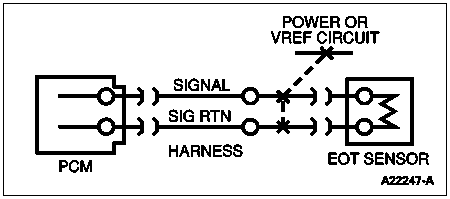
- Enter Key On/Engine Off Continuous Monitor Diagnostic Test Mode (DTM). Refer to Scan Tool Diagnostic Test.
- Enable Super STAR II speaker.
- Tap on the sensor to simulate road shock.
- Wiggle the sensor connector.
Is a concern indicated?
| Yes | No |
|---|
| DISCONNECT and inspect connectors. If OK, REPLACE the sensor. CLEAR Continuous Memory. RERUN Scan Tool Diagnostic Test. | GO to Y11. |
Y11 CHECK EEC-V VEHICLE HARNESS
- Still in Key On/Engine Off Continuous Monitor DTM.
- Enable Super STAR II speaker.
- Grasp the vehicle harness close to the sensor connector. Wiggle, shake or bend a small section of the closed loop system vehicle harness while working your way to the dash panel. Also wiggle, shake or bend the vehicle harness from the dash panel to the PCM.
Is a concern indicated?
| Yes | No |
|---|
| ISOLATE concern and SERVICE as necessary. CLEAR Continuous Memory. RERUN Scan Tool Diagnostic Test. | GO to Y12. |
Y12 CHECK PCM AND VEHICLE HARNESS CONNECTORS
- Key off.
- Disconnect powertrain control module (PCM). Disconnect sensor connector. Inspect for damage, loose or pushed-out pins, loose or poorly crimped wires.
Are connectors and terminals OK?
| Yes | No |
|---|
| Unable to duplicate and/or identify concern at this time. RERUN Scan Tool Diagnostic Test. | SERVICE as necessary. CLEAR Continuous Memory. RERUN Scan Tool Diagnostic Test. |
 Y: Introduction