1994 PCED OBDI-A | SECTION 6A: EEC-IV Pinpoint Test
Procedures |
TC1 ENTER OUTPUT STATE DIAGNOSTIC TEST MODE (DTM)
Refer to Quick Test Appendix, Section 5A.
DTCs 91/621, 92/622, 93/626, 94, 629, 641 and 652 indicate solenoid did not change state when requested by the Powertrain Control Module (PCM).
DTC 566 or 629 indicates the CCO or SS3/4-4/3 did not change state when requested by the PCM.
Possible causes:
- Damaged solenoid/assembly.
- Open or shorted harness (internal/external).
- Damaged PCM.
Note: Do not use a STAR Tester for this step. Use a VOM or DVOM.
- Disconnect electrical connector on the speed control servo, if equipped.
- VOM/DVOM on 20 volt scale.
- Connect negative test lead to STO circuit at Data Link Connector (DLC) and meter positive test lead to B+.
- Jumper STI circuit to SIG RTN at the DLC.
- Perform Key On Engine Off Self-Test until Continuous Memory DTC have been displayed.
- VOM/DVOM will indicate less than 1.0 volt when test is complete.
- Depress and release throttle.
Does voltage increase?
| Yes | No |
|---|
| REMAIN in Output State DTM. GO to TC2. | DEPRESS throttle to WOT and RELEASE. If STO voltage does not go high, PERFORM Pinpoint Test Step QC1. Leave equipment hooked up. |
TC2 CHECK SOLENOID ELECTRICAL OPERATION
- Key on, engine off.
- Disconnect transmission connector.
- Using a mirror, inspect both ends of the connector for damaged or pushed out pins, corrosion, loose wires, etc. Service as necessary.
- Refer to the schematic and table of this Pinpoint Test.
- Connect VOM/DVOM positive test lead to VPWR circuit and negative test lead to solenoid circuit of the transmission vehicle harness connector.
- VOM/DVOM on 20 volt scale.
- While observing DVOM, depress and release throttle several times to cycle solenoid output ON and OFF.
Does the suspect solenoid output voltage change at least 0.5 volt?
| Yes | No |
|---|
| RECONNECT connector. REFER to the Transmission Group in the Service Manual. | REMOVE jumper wire. GO to TC3. |
TC3 CHECK CONTINUITY OF SOLENOID SIGNAL AND VPWR HARNESS CIRCUITS
- Key off.
- Solenoid transmission connector disconnected.
- Disconnect Powertrain Control Module (PCM). Inspect for damaged or pushed out pins, corrosion, loose wires, etc. Service as necessary.
- Install breakout box, leave PCM disconnected.
- Refer to schematic and table in this Pinpoint Test.
- Measure resistance between suspect PCM signal output pin at the breakout box and signal output pin at transmission vehicle harness connector.
- Measure resistance between Test Pin 37/57 at the breakout box and VPWR pin at transmission vehicle harness connector.
Is each resistance less than 5.0 ohms?
| Yes | No |
|---|
| GO to TC4. | SERVICE open circuit(s). REMOVE breakout box. RECONNECT all components. RERUN Quick Test. |
TC4 CHECK SOLENOID HARNESS FOR SHORTS TO POWER OR GROUND
- Key off.
- Breakout box installed, PCM disconnected.
- Transmission connector disconnected.
- Refer to schematic and table in this Pinpoint Test.
- Measure resistance between PCM signal output pin and Test Pin 37/57 at the breakout box.
- Measure resistance between PCM signal output pin and Test Pins 40/60 and 46 at the breakout box and chassis ground.
Is each resistance greater than 10,000 ohms?
| Yes | No |
|---|
| REFER to Service Manual, Transmission Diagnosis for internal harness and solenoids. IF OK, REPLACE PCM. REMOVE breakout box. RECONNECT all components. RERUN Quick Test. | SERVICE short circuits. REMOVE breakout box. RECONNECT all components. RERUN Quick Test. |
TC10 CHECK VPWR TO SOLENOID
DTCs 99/624 indicate a failure of EPC circuit.
DTC 625 indicates an opening in the driver circuit.
Possible causes:
- Open or short in harnesses (internal/external).
- Solenoid damaged electrically.
- Key off.
- Disconnect transmission connector.
- Key on, engine off.
- Measure the voltage between VPWR, EPC PWR circuit at transmission vehicle harness connector and chassis/battery ground.
Is voltage greater than 10.5 volts?
| Yes | No |
|---|
| GO to TC11. | SERVICE open in harness. RECONNECT all components. RERUN Quick Test. |
TC11 CHECK CONTINUITY OF SOLENOID SIGNAL AND VPWR HARNESS CIRCUIT
- Key off.
- Disconnect Powertrain Control Module (PCM). Inspect for damaged or pushed out pins, corrosion, loose wires, etc. Service as necessary.
- Install breakout box, leave PCM disconnected.
- Measure the resistance between Test Pin 37/57 (Test Pin 35 on 7.3L Diesel for EPC solenoid check only) at the breakout box and VPWR/EPC PWR circuit at the transmission vehicle harness connector.
- Measure resistance between Test Pin 38 at the breakout box and EPC solenoid signal pin at the transmission vehicle harness connector.
Is each resistance less than 5.0 ohms?
| Yes | No |
|---|
| GO to TC12. | SERVICE open circuit. REMOVE breakout box. RECONNECT all components. RERUN Quick Test. |
TC12 CHECK HARNESS FOR SHORT TO POWER OR GROUND
- Key off.
- Breakout box installed, PCM disconnected.
- Transmission bulkhead connector disconnected.
- Refer to the schematic for the transmission and vehicle application.
- Measure resistance between suspect solenoid circuit Test Pin and Test Pin 37/57 (Test Pin 35 on 7.3L Diesel) at the breakout box.
- Measure resistance between suspect solenoid circuit Test Pin and Test Pins 40/60, 46 at the breakout box.
Is each resistance greater than 10,000 ohms?
| Yes | No |
|---|
| REFER to Service Manual Transmission Diagnosis for internal harness and solenoids. If OK, REPLACE PCM. REMOVE breakout box. RECONNECT EPC solenoid. RERUN Quick Test. | SERVICE short circuits. REMOVE breakout box. RECONNECT all components. RERUN Quick Test. |
TC20 KEY ON ENGINE OFF DIAGNOSTIC TROUBLE CODES (DTCS) 621/622/641/643:
CHECK SOLENOID RESISTANCE
Key On Engine Off DTCs 621 (SS1), 622 (SS2), 641 (SS3) and 643 (TCC) indicate a failure in the respective shift solenoid circuit.
Possible causes:
- Open harness.
- Shorted harness (ground or power).
- Damaged shift solenoid.
- Damaged PCM.
- Key off.
- Disconnect transmission connector (12 pin at transmission).
- Measure resistance between suspect shift solenoid circuit at transmission connector and chassis ground.
If the resistance between 13 and 27 ohms?
TC21 CHECK SHIFT SOLENOID CIRCUIT FOR SHORT TO POWER
- Key off.
- Transmission 12-pin connector disconnected.
- Disconnect Powertrain Control Module (PCM). Inspect for damaged or pushed out pins, corrosion, loose wires, etc. Service as necessary. Leave PCM disconnected.
- Key on, engine off.
- Measure voltage between suspect shift solenoid circuit at transmission vehicle harness connector and chassis ground.
Is voltage less than 0.5 volt?
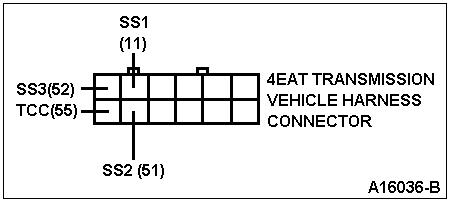
| Yes | No |
|---|
| Key off. GO to TC22. | SERVICE short to power. RECONNECT all components.
RERUN Quick Test. |
TC22 CHECK SHIFT SOLENOID CIRCUIT FOR SHORT TO GROUND
- Key off.
- Transmission 12-pin connector disconnected.
- PCM disconnected.
- Measure resistance between suspect shift solenoid circuit at transmission vehicle harness connector and chassis ground.
- Measure resistance between suspect shift solenoid circuit and the other circuits at transmission 12-pin vehicle harness connector.
Are all resistances greater than 10,000 ohms?
| Yes | No |
|---|
| GO to TC23. | SERVICE short. RECONNECT all components. RERUN Quick Test. |
TC23 CHECK SHIFT SOLENOID CIRCUIT CONTINUITY
- Key off.
- Transmission 12-pin connector disconnected.
- Install breakout box or 4EAT Tester, leave PCM disconnected.
- Measure resistance between suspect shift solenoid test pin at the breakout box and shift solenoid circuit at transmission 12-pin vehicle harness connector.
Is resistance less than 5.0 ohms?
| Yes | No |
|---|
| GO to TC24. | SERVICE open circuit. RECONNECT all components. RERUN Quick Test. |
TC24 CHECK SHIFT SOLENOID FOR SHORT TO POWER IN TRANSMISSION
- Key off.
- Breakout box installed, PCM disconnected.
- Reconnect transmission 12-pin connector.
- Key on, engine off.
- Measure voltage between suspect shift solenoid test pin at the breakout box and Test Pin 60.
Is voltage less than 0.5 volt?
| Yes | No |
|---|
| REPLACE PCM. REMOVE breakout box. RERUN Quick Test. | SERVICE shift solenoid circuit within transmission for a short to power (REFER to Transmission Group in the Service Manual for disassembly procedures). SERVICE as necessary. REMOVE breakout box. RECONNECT PCM. RERUN Quick Test. |
TC25 INSPECT TRANSMISSION WIRING
- Key off.
- Check transmission connector/external wiring for open or shorts. Service as necessary.
- Check internal transmission wiring for opens or shorts. Refer to Transmission Group in the Service Manual for disassembly procedures.
Is the transmission wiring OK?
| Yes | No |
|---|
| REPLACE suspect shift solenoid. REASSEMBLE/ RECONNECT all components. RERUN Quick Test. | SERVICE as necessary. REASSEMBLE/ RECONNECT all components. RERUN Quick Test. |
TC30 CONTINUOUS MEMORY DIAGNOSTIC TROUBLE CODES (DTCS) 621/622/641/643:
VISUALLY CHECK SHIFT SOLENOID HARNESS
Continuous Memory DTCs 621 (SS1), 622 (SS2), 641 (SS3) and 643 (TCC) indicate that sometime during the last 80 warm-up cycles, a failure was detected in the respective shift solenoid circuit.
Possible causes:
- Intermittent open/shorted harness.
- Intermittent fault in shift solenoid.
- Check shift solenoid wires between transmission and Powertrain Control Module (PCM).
Do the shift solenoid wires appear OK?
| Yes | No |
|---|
| GO to TC31. | SERVICE as necessary. CLEAR Continuous Memory (REFER to Quick Test Appendix, Section 5A). RERUN Quick Test. |
TC31 CHECK HARNESS AND CONNECTORS FOR INTERMITTENT OPENS OR SHORTS
- Key off.
- Disconnect Powertrain Control Module (PCM). Inspect for damaged or pushed out pins, corrosion, loose wires, etc. Service as necessary.
- Install breakout box or 4EAT Tester. Leave PCM disconnected.
- Key on, engine off.
- Refer to the chart below. Connect a test lamp between suspect shift solenoid test pins and Test Pin 37 (VPWR) at the breakout box.
- Observe test lamp for an indication of a fault while performing the following (the lamp will normally be on, but not to full brightness due to the 12-25 ohm resistance to ground through the shift solenoid; an open or short to power will be indicated by the light turning off; and short to ground may be detected by the light getting brighter):
- Shake, wiggle and bend the shift solenoid circuit from the transmission to PCM. Lightly excercise harness connectors.
- Key off.
| Shift Solenoid | Test Pin |
|---|
| SS1 | 11 |
| SS2 | 51 |
| SS3 | 52 |
| TCC | 55 |
Is a fault indicated?
| Yes | No |
|---|
| ISOLATE fault and SERVICE as necessary. REMOVE breakout box. RECONNECT all components. RERUN Quick Test. | GO to TC32. |
TC32 CHECK HARNESS AND CONNECTORS FOR INTERMITTENT SHORTS TO GROUND
- Key off.
- Breakout box installed, PCM disconnected.
- Disconnect transmission 12-pin connector. Inspect for damaged or pushed out pins, corrosion, loose wires, etc. Service as necessary.
- Key on, engine off.
- Refer to the chart in TC31. Connect a test lamp between the suspect shift solenoid test pins and Test Pin 37.
- Observe test lamp for an indication of fault while performing the following (light will turn on when a fault is detected, indicating a short to ground):
- Shake, wiggle and bend the shift solenoid circuit from the transmission to the PCM.
- Repeat the test for remaining shift solenoid circuits.
Is a fault indicated?
| Yes | No |
|---|
| ISOLATE fault and SERVICE as necessary. REMOVE breakout box. RECONNECT all components. RERUN Quick Test. | For further diagnosis using the EEC-IV monitor box, REFER to Section 7A.
If an EEC-IV monitor box is not available, GO to Pinpoint Test Step TD22 and use procedure to check the shift solenoid circuits). |
 TC: Introduction